

Email · kontakt@ine.org.pl
Institute of New Europe Institute of New Europe Institute of New Europe Institute of New Europe
  • About
  • Publications
      • Publications

        The primary categories of materials published by the Institute as part of its research and analytical activities.

      • SEE ALL PUBLICATIONS

      • Analyses
        Daily commentary and analysis on international issues provided by our experts and analysts
      • Reports
        Comprehensive thematic studies on international relations and socio-political issues
      • Video
        Recordings of expert debates and series of video podcasts created by our team and experts
      • Maps
        Selection of maps depicting international alliances and foreign visits of key politicians
  • Programmes
      • Programmes

        The main areas of research and publication activities at the Institute with separate teams of experts, functioning under the supervision of the head of a particular programme.

      • WEBSITE OF THE THREE SEAS PROJECT

      • Europe
        Analyses and commentaries on European integration and the place of Europe on the political and economic map of the world
      • Security
        Studies in the field of international and internal security of individual states, with particular emphasis on the role of NATO
      • Indo-Pacific
        An overview of the political and economic situation in the region, the status of the U.S.-China rivalry, and the EU’s policy towards China
      • Three Seas Think Tanks Hub
        Analyses and studies of the Three Seas Initiative, taking into account the perspectives of the participating states
  • People
  • Contact-Careers
  • Polish-Czech Forum
  • Polski
Institute of New Europe Institute of New Europe
  • About
  • Publications
      • Publications

        The primary categories of materials published by the Institute as part of its research and analytical activities.

      • SEE ALL PUBLICATIONS

      • Analyses
        Daily commentary and analysis on international issues provided by our experts and analysts
      • Reports
        Comprehensive thematic studies on international relations and socio-political issues
      • Video
        Recordings of expert debates and series of video podcasts created by our team and experts
      • Maps
        Selection of maps depicting international alliances and foreign visits of key politicians
  • Programmes
      • Programmes

        The main areas of research and publication activities at the Institute with separate teams of experts, functioning under the supervision of the head of a particular programme.

      • WEBSITE OF THE THREE SEAS PROJECT

      • Europe
        Analyses and commentaries on European integration and the place of Europe on the political and economic map of the world
      • Security
        Studies in the field of international and internal security of individual states, with particular emphasis on the role of NATO
      • Indo-Pacific
        An overview of the political and economic situation in the region, the status of the U.S.-China rivalry, and the EU’s policy towards China
      • Three Seas Think Tanks Hub
        Analyses and studies of the Three Seas Initiative, taking into account the perspectives of the participating states
  • People
  • Contact-Careers
  • Polish-Czech Forum
  • Polski
Jul 21
Africa and Middle East, Analysis, Publications, USA

Joe Biden’s Presidential Trip to the Middle East (13th-16th July) – commentary

July 21, 2022

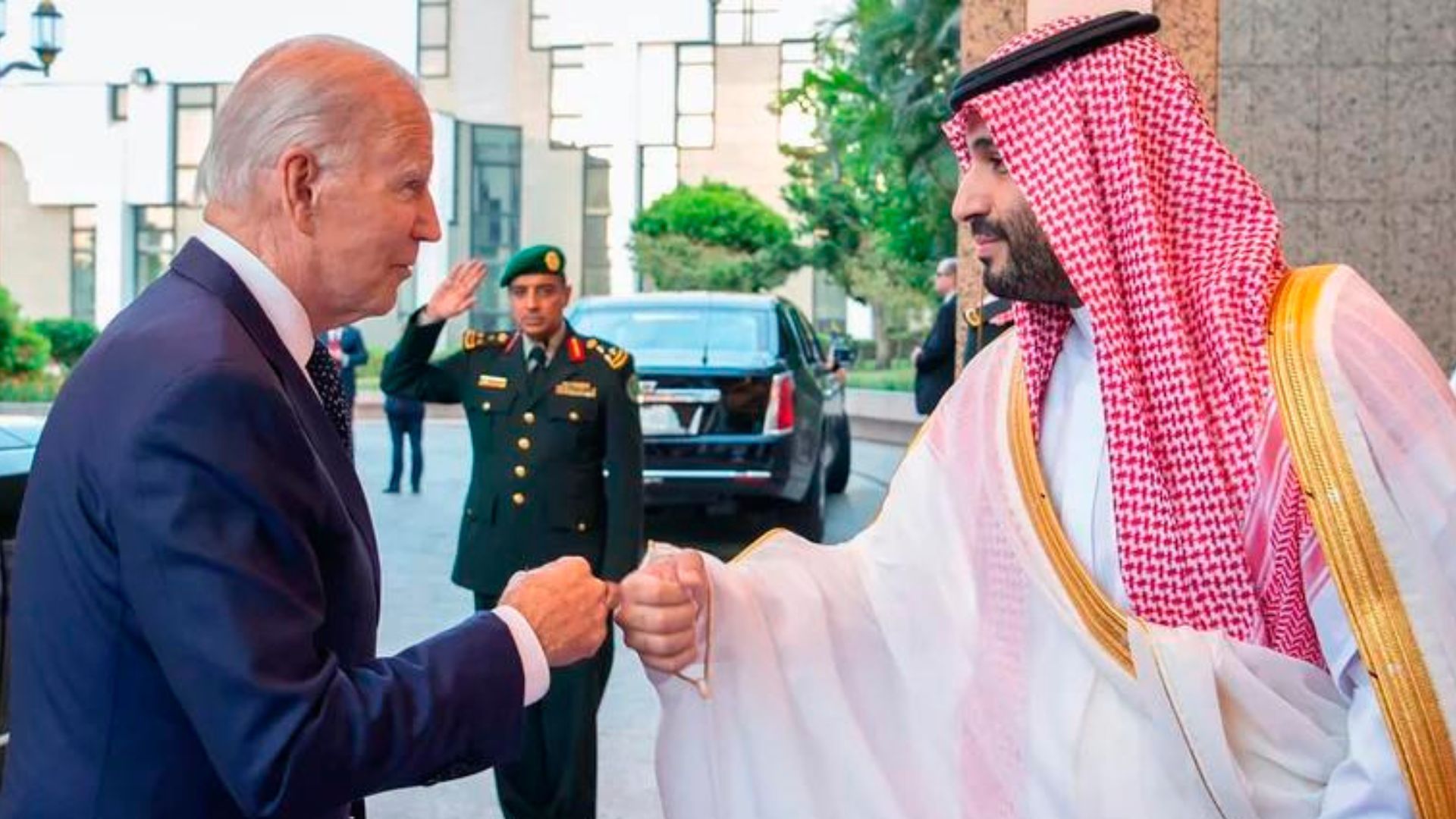
Four-day journey of President Joe Biden to the Middle East has come to an end. From Wednesday to Saturday (13th-16th July 2022), the President of the USA was in Israel and Saudi Arabia, where he met with the leaders of both aforementioned countries and with the authorities of Bahrain, Egypt, Iraq, Jordan, Qatar, Kuwait, Oman, UAE, and the President of Palestinian Authority. He participated in the USA-GCC+3 (Gulf Cooperation Council + Egypt, Iraq, Jordan) Summit and the new format I2U2 (India, Israel, UAE, and the USA). Among a plethora of raised issues, those deserve particular attention: the Iranian nuclear program, economic and infrastructural initiatives in light of Chinese concerns, energetic security (the oil market in particular), Israeli-Arab relations, and regional security.

The Iranian Issue

Two days before the start of Biden’s journey to Israel, Jake Sullivan, National Security Adviso, said that according to the American intelligence reports Iran is planning to urgently supply Russia with a few hundred drones (also military) and to provide prior training schemes in terms of use for the Russian soldiers. Later, when the presidential trip was already underway, Jake Sullivan said that in the last couple of weeks, two Russian deputations visited Iran to talk about the operational capabilities of the mentioned drones. On Tuesday (the 19th of July), Vladimir Putin and Recep Tayyip Erdogan are due to pay a visit to Tehran. Iranians, striving to make their first nuclear bomb and allegedly planning to support Russia in Ukraine, were the central focus of the first talks held in Israel. In the joint statement issued by Joe Biden and PM Yair Lapid on the 14th of July, the USA declared that they “will never allow Iran to acquire nukes” and that to achieve this, “[they are] prepared to use all elements of its national power”. In the interview for the Israeli Channel 12 TV, broadcasted on the same day, POTUS expressed support for the further recognition of the Islamic Revolutionary Guard Corps (IRGC) as a terrorist organization, even if it was to preclude coming back to the JCPOA nuclear deal with Iran. He also added that “as last resort” the US is prepared to use power against Iran. At the same time, during the joint conference with Yair Lapid, Biden acknowledged that he believes in diplomacy as the best solution to prevent Iran – the latter was quickly countered by Lapid (“Mr. President, diplomacy will not stop them”). Biden said that the Iranian leadership had been presented with the proposal of conditions on which the USA could come back to JCPOA and that Washington is awaiting a response. However, they are “not going to wait forever”.

In the multilateral statement issued by the USA and countries of GCC (Saudi Arabia, UAE, Qatar, Bahrain, and Kuwait) in Jeddah (Saudi Arabia), the parties reaffirmed the commitment to the idea that the Gulf region should be free from the weapons of mass destruction, and support for the diplomatic efforts aimed at stopping Iranian nuclear program. Jeddah Communique (joint American-Saudi statement), included a declaration about the need for further deterrence of “Iran’s interference in the internal affairs of other countries” and “its efforts to destabilize the security and stability of the region”. In the speech delivered during the GCC+3 (Egypt, Iraq, Jordan), Biden reaffirmed that the USA “will not walk away” from the Middle East and that they “will not leave a vacuum to be filled by China, Russia or Iran”.

Economic and Infrastructural Initiatives

In the face of intensifying American-Chinese rivalry and its progressing transformation into the clash between ‘The West’ and China (or, more broadly, the entire authoritarian world), it must be mentioned that during Biden’s journey, the number of bi- and multilateral initiatives was discussed and/or announced. 

Firstly, on the 14th of July, the state-leaders of the newly-launched initiative I2U2 (India, Israel, UAE, USA) held their first (virtual) summit. The sides agreed that they should build connectivity in the area of the Middle East by supporting private investment in a broadly construed infrastructure, food, and health security, space exploration, new technologies, green transformation, etc. Within the framework of one of those initiatives, the UAE is set to invest 2 billion dollars in the development of a series of integrated food parks in India, aimed at reduction of food waste and spoilage, conservation of fresh water, and maximization of crop productivity through the latest technologies. The venture is intended to increase food security in the areas of South Asia and the Middle East. Under the second initiative, the parties are set to build a hybrid 124 MV plant in the Indian state of Gujarat. 

Secondly, the USA and Israel have launched a strategic dialogue in the field of technology (Strategic High-Level Dialogue on Technology). The goals of the initiative involve: combining the technological capacities of both countries in a new, refined format that will more efficiently deal with the current challenges; protection of critical innovations and technologies, and promotion of shared values. The Strategic Dialogue will be held annually, starting in the Fall of 2022. 

Thirdly, as part of détente in American-Saudi relations, Riyadh will engage financially in the project of Partnership for Global Infrastructure and Investment (PGII) announced by President Biden at the G7 Summit in June 2022. Furthermore, the parties agreed to combine efforts in the fields of 5G/6G technologies, cybersecurity, space exploration (Saudis opted to enter the Artemis Accords – an agreement launched by Washington that so far has involved 20 countries), public health, and clean energy. Mr. Biden chose a new start in bilateral relations with Saudi Arabia, nonetheless, during the meeting with Crown Prince Mohammad bin Salman (MBS) he did mention the assassination of Jamal Khashoggi, and further expressed his conviction that MBS is responsible for orchestrating that.

Fourthly, the USA plans to expand its cooperation with the Arab states to bolster the infrastructural, economic and technological ties. For instance, GCC countries are considering the input of 3 billion USD into the PGII initiative. Along with Egypt, Iraq, and Jordan, they chose to join the “Roadmap for Global Food Security – Call to Action” – the initiative started by the USA in May 2022. The USA is bound to contribute financially to the food aid programs in the countries of the Middle East and North Africa.

The Palestinian Issue

In the joint American-Israeli statement, Joe Biden reaffirmed his support for the Two-state solution – i.e. the simultaneous existence of the Jewish and the Palestinian states, where both the Israelis, and the Palestinians could “achieve equal measures of security, prosperity, freedom, and democracy”. The communique issued after the meeting of Biden and Mahmud Abbas – the President of the Palestinian Authority – included the same message. Additionally, POTUS reaffirmed that the USA recognizes Jerusalem as the capital of Israel. Speaking alongside President Abbas, Biden ensured that Washington will continue to insist on a “full and transparent accounting” of the death of Shireen Abu-Akleh – American-Palestinian Al-Jazeera journalist who was killed by the Israeli units in May 2022. In the speech delivered in Augusta Victoria Hospital in East Jerusalem, Joe Biden recalled his Irish roots and compared the fate of Palestinians under Israeli administration to the situation of Irish people under the British rule. In a separate statement, POTUS announced a number packages worth in total of 316 billion dollars, and aimed to support the Palestinian society and state in the following areas: healthcare, technology, economy, food, refugee aid, and finally dialogue and cooperation between the Israelis and Palestinians. Back in April 2021, Biden’s administration announced the revival of aid programs dedicated to Palestine, which in 2018 were cut by Trump’s administration.

Regional Security

In the series of statements and speeches (I2U2, American-Israeli Joint Statement, USA-Bahrain, and USA-UAE talks), the sides expressed the commitment to fostering peace in the Middle East through the Abraham Accords. Saudi Arabia announced the reopening of its airspace to all airplanes that comply with Saudi regulations, which applies also to Israeli commercial flights. 

The USA and the Gulf states will tighten their cooperation in the field of maritime (Combined Task Force 153 and Task Force 59), anti-drone, anti-missile, and other forms of defense. The issue of Yemen played a significant role in talks between Saudis and Americans. Since the 2nd of April, a fragile truce, extended by another two months, has been in place. Both capitals opt for its further extension, though it will probably make up a very challenging task. Both sides are also committed to the Two-state Solution for Israel and Palestine, however, this vision remains distant. Friday 16th of July 2022 brought an agreement on connecting the Iraqi power grid to the Gulf-states’ grid. The USA and Saudi Arabia issued declarations that pertain to the situation in Afghanistan, Lebanon, Libya, Sudan, Syria, as well as in Ukraine, however, those did not include any seminal shifts in standpoints.

Energy

During a couple of weeks preceding Biden’s journey, the White House vowed that the raw materials markets will only be one among many issues raised throughout talks in Riyadh. During the flight from Tel-Aviv to Jeddah, Jake Sullivan even claimed that the audience should not expect any special declarations regarding the extraction of oil, since all pertinent decisions will be made within OPEC+. Nevertheless, for a significant period, Joe Biden has been seeking to decrease oil prices in global prices.

In the speech delivered at the GCC Summit, Crown Prince Mohammad bin Salman, who holds actual power in Saudi Arabia, declared the increase in the production capacities from 12 million barrels of oil a day to 13 barrels a day up until 2027. He added that it is a technical limit of the Kingdom. He also claimed that further investment should be channeled both into clean energy sources and fossil fuels, as the “unrealistic energy policies based on eliminating the main energy sources” will lead to “unprecedented inflation” and social problems.

Conclusion

Joe Biden’s journey to the Middle East was significant due to a number of reasons. First of all, it clearly showed in the symbolic and practical dimension that the USA is not disregarding that region, even despite the facts of controversial withdrawal from Afghanistan, prioritizing the Indo-Pacific region, and directing the attention mostly at Russian aggression in Ukraine. Secondly, fostering the economic and infrastructural bonds with the developing countries is vital for the USA to build a strong bid in rivalry with China and counter the Chinese, Russian, and Iranian interference. The fruits of all of these efforts shall come with time. Thirdly, Biden had an opportunity to reassure the allies and partners in the conviction that Washington will not allow Iran to acquire nuclear armament. The declaration of using power as a last resort might be soon verified, considering the advancements that the Ajatollahs’ regime is making in enriching the uranium.

The absence of seminal declarations with regard to oil extraction should not be counted as a disappointment, as no one expected them. The meeting of the OPEC+ countries, panned for the 3rd of August 2022, will tell how influential Joe Biden effectively was. POTUS said that based on the talks held in SA, he expects to see further steps in increasing the supply of the resource in the upcoming weeks.

The rapprochement with Riyadh despite the declarations from 2019 to make Saudi Arabia a “pariah” on the international stage, did stir some significant controversies. In terms of image, it is a defeat, nonetheless, some potential successes achieved in the crude game of interests might prospectively yield benefits which could probably, at least to some extent, mitigate the temporarily bad renown. Raising Khashoggi’s case during the talks with MBS was symbolically important, however, the chance that it will entail some significant changes in SA is relatively little.

Translator: Marcin Pijaj

  • Facebook
  • Twitter
  • Tumblr
  • Pinterest
  • Google+
  • LinkedIn
  • E-Mail
Jakub Graca Jakub Graca. A graduate of the Jagiellonian University in Kraków (international relations, MA), he also studied Arabic there. A former analyst at the Centre for International Initiatives (CIM) and the Center for Eastern Studies (OSW). Currently an analyst for the Institute for New Europe on U.S. foreign and domestic policy as well as international security.

Related Posts

See All Publications
  • Europe, Publications, Russia

Russia Affairs Review December 2025

Ksawery Stawiński, Adam Jankowski 01.12 – Turkey balances between Russia and the US, tilting toward Washington In November, India and…
  • Adam Jankowski
  • January 16, 2026
  • China, European Union, Indo-Pacific, Publications

EU-China Affairs Review December 2025

Mikołaj Woźniak, Konrad Falkowski 1.12. The EU Ends Dispute with China over Lithuania. On December 1, the World Trade Organization…
  • Konrad Falkowski
  • January 11, 2026
  • Africa and Middle East, Analysis, Publications, Syria

Syria — a year after Assad’s fall

Introduction One year since Assad’s ouster is gone. Surprising offensive launched by Syrian rebels in late November 2024 have led…
  • Filip Grzebuła
  • December 20, 2025
See All Publications

Comments are closed.

Jakub Graca Jakub Graca. A graduate of the Jagiellonian University in Kraków (international relations, MA), he also studied Arabic there. A former analyst at the Centre for International Initiatives (CIM) and the Center for Eastern Studies (OSW). Currently an analyst for the Institute for New Europe on U.S. foreign and domestic policy as well as international security.
Program Europa tworzą:

Marcin Chruściel

Dyrektor programu. Absolwent studiów doktoranckich z zakresu nauk o polityce na Uniwersytecie Wrocławskim, magister stosunków międzynarodowych i europeistyki Uniwersytetu Jagiellońskiego. Prezes Zarządu Instytutu Nowej Europy.

dr Artur Bartoszewicz

Przewodniczący Rady Programowej Instytutu Nowej Europy. Doktor nauk ekonomicznych Szkoły Głównej Handlowej. Ekspert w dziedzinie polityki publicznej, w tym m. in. strategii państwa i gospodarki.

Michał Banasiak

Specjalizuje się w relacjach sportu i polityki. Autor analiz, komentarzy i wywiadów z zakresu dyplomacji sportowej i polityki międzynarodowej. Były dziennikarz Polsat News i wysłannik redakcji zagranicznej Telewizji Polskiej.

Maciej Pawłowski

Ekspert ds. migracji, gospodarki i polityki państw basenu Morza Śródziemnego. W latach 2018-2020 Analityk PISM ds. Południowej Europy. Autor publikacji w polskiej i zagranicznej prasie na temat Hiszpanii, Włoch, Grecji, Egiptu i państw Magrebu. Od września 2020 r. mieszka w północnej Afryce (Egipt, Algieria).

Jędrzej Błaszczak

Absolwent studiów prawniczych Uniwersytetu Śląskiego w Katowicach. Jego zainteresowania badawcze koncentrują się na Inicjatywie Trójmorza i polityce w Bułgarii. Doświadczenie zdobywał w European Foundation of Human Rights w Wilnie, Center for the Study of Democracy w Sofii i polskich placówkach dyplomatycznych w Teheranie i Tbilisi.

Program Bezpieczeństwo tworzą:

dr Aleksander Olech

Dyrektor programu. Wykładowca na Baltic Defence College, absolwent Europejskiej Akademii Dyplomacji oraz Akademii Sztuki Wojennej. Jego główne zainteresowania badawcze to terroryzm, bezpieczeństwo w Europie Środkowo-Wschodniej oraz rola NATO i UE w środowisku zagrożeń hybrydowych.

dr Agnieszka Rogozińska

Członek Rady Programowej Instytutu Nowej Europy. Doktor nauk społecznych w dyscyplinie nauki o polityce. Zainteresowania badawcze koncentruje na problematyce bezpieczeństwa euroatlantyckiego, instytucjonalnym wymiarze bezpieczeństwa i współczesnych zagrożeniach.

Aleksy Borówka

Doktorant na Wydziale Nauk Społecznych Uniwersytetu Wrocławskiego, Przewodniczący Krajowej Reprezentacji Doktorantów w kadencji 2020. Autor kilkunastu prac naukowych, poświęconych naukom o bezpieczeństwie, naukom o polityce i administracji oraz stosunkom międzynarodowym. Laureat I, II oraz III Międzynarodowej Olimpiady Geopolitycznej.

Karolina Siekierka

Absolwentka Uniwersytetu Warszawskiego na kierunku stosunki międzynarodowe, specjalizacji Bezpieczeństwo i Studia Strategiczne. Jej zainteresowania badawcze obejmują politykę zagraniczną i wewnętrzną Francji, prawa człowieka oraz konflikty zbrojne.

Stanisław Waszczykowski

Podoficer rezerwy, student studiów magisterskich na kierunku Bezpieczeństwo Międzynarodowe i Dyplomacja na Akademii Sztuki Wojennej, były praktykant w BBN. Jego zainteresowania badawcze obejmują m.in. operacje pokojowe ONZ oraz bezpieczeństwo Ukrainy.

Leon Pińczak

Student studiów drugiego stopnia na Uniwersytecie Warszawskim na kierunku stosunki międzynarodowe. Dziennikarz polskojęzycznej redakcji Biełsatu. Zawodowo zajmuje się obszarem postsowieckim, rosyjską polityką wewnętrzną i doktrynami FR. Biegle włada językiem rosyjskim.

Program Indo-Pacyfik tworzą:

Łukasz Kobierski

Dyrektor programu. Współzałożyciel INE oraz prezes zarządu w latach 2019-2021. Stypendysta szkoleń z zakresu bezpieczeństwa na Daniel Morgan Graduate School of National Security w Waszyngtonie, ekspert od stosunków międzynarodowych. Absolwent Uniwersytetu Warszawskiego oraz Uniwersytetu Mikołaja Kopernika. Wiceprezes Zarządu INE.

dr Joanna Siekiera

Prawnik międzynarodowy, doktor nauk społecznych, adiunkt na Wydziale Prawa Uniwersytetu w Bergen w Norwegii. Była stypendystką rządu Nowej Zelandii na Uniwersytecie Victorii w Wellington, niemieckiego Institute of Cultural Diplomacy, a także francuskiego Institut de relations internationales et stratégiques.

Paweł Paszak

Absolwent stosunków międzynarodowych (spec. Wschodnioazjatycka) na Uniwersytecie Warszawskim oraz stypendysta University of Kent (W. Brytania) i Hainan University (ChRL). Doktorant UW i Akademii Sztuki Wojennej. Jego zainteresowania badawcze obejmują politykę zagraniczną ChRL oraz strategiczną rywalizację Chiny-USA.

Jakub Graca

Magister stosunków międzynarodowych na Uniwersytecie Jagiellońskim; studiował także filologię orientalną (specjalność: arabistyka). Analityk Centrum Inicjatyw Międzynarodowych (Warszawa) oraz Instytutu Nowej Europy. Zainteresowania badawcze: Stany Zjednoczone (z naciskiem na politykę zagraniczną), relacje transatlantyckie.

Patryk Szczotka

Absolwent filologii dalekowschodniej ze specjalnością chińską na Uniwersytecie Wrocławskim oraz student kierunku double degree China and International Relations na Aalborg University oraz University of International Relations (国际关系学院) w Pekinie. Jego zainteresowania naukowe to relacje polityczne i gospodarcze UE-ChRL oraz dyplomacja.

The programme's team:

Marcin Chruściel

Programme director. Graduate of PhD studies in Political Science at the University of Wroclaw and Master studies in International Relations at the Jagiellonian University in Krakow. President of the Management Board at the Institute of New Europe.

PhD Artur Bartoszewicz

Chairman of the Institute's Programme Board. Doctor of Economic Sciences at the SGH Warsaw School of Economics. Expert in the field of public policy, including state and economic strategies. Expert at the National Centre for Research and Development and the Digital Poland Projects Centre.

Michał Banasiak

He specializes in relationship of sports and politics. Author of analysis, comments and interviews in the field of sports diplomacy and international politics. Former Polsat News and Polish Television’s foreign desk journalist.

Maciej Pawłowski

Expert on migration, economics and politics of Mediterranean countries. In the period of 2018-2020 PISM Analyst on Southern Europe. Author of various articles in Polish and foreign press about Spain, Italy, Greece, Egypt and Maghreb countries. Since September 2020 lives in North Africa (Egypt, Algeria).

Jędrzej Błaszczak

Graduate of Law at the University of Silesia. His research interests focus on the Three Seas Initiative and politics in Bulgaria. He acquired experience at the European Foundation of Human Rights in Vilnius, the Center for the Study of Democracy in Sofia, and in Polish embassies in Tehran and Tbilisi.

PhD Aleksander Olech

Programme director. Visiting lecturer at the Baltic Defence College, graduate of the European Academy of Diplomacy and War Studies University. His main research interests include terrorism, international cooperation for security in Eastern Europe and the role of NATO and the EU with regard to hybrid threats.

PhD Agnieszka Rogozińska

Member of the Institute's Programme Board. Doctor of Social Sciences in the discipline of Political Science. Editorial secretary of the academic journals "Politics & Security" and "Independence: journal devoted to Poland's recent history". Her research interests focus on security issues.

Aleksy Borówka

PhD candidate at the Faculty of Social Sciences in the University of Wroclaw, the President of the Polish National Associations of PhD Candidates in 2020. The author of dozen of scientific papers, concerning security studies, political science, administration, international relations. Laureate of the I, II and III International Geopolitical Olympiad.

Karolina Siekierka

Graduate of International Relations specializing in Security and Strategic Studies at University of Warsaw. Erasmus student at the Université Panthéon-Sorbonne (Paris 1) and the Institut d’Etudes Politique de Paris (Sciences Po Paris). Her research areas include human rights, climate change and armed conflicts.

Stanisław Waszczykowski

Reserve non-commissioned officer. Master's degree student in International Security and Diplomacy at the War Studies University in Warsaw, former trainee at the National Security Bureau. His research interests include issues related to UN peacekeeping operations and the security of Ukraine.

Leon Pińczak

A second-degree student at the University of Warsaw, majoring in international relations. A journalist of the Polish language edition of Belsat. Interested in the post-Soviet area, with a particular focus on Russian internal politics and Russian doctrines - foreign, defense and information-cybernetic.

Łukasz Kobierski

Programme director. Deputy President of the Management Board. Scholarship holder at the Daniel Morgan Graduate School of National Security in Washington and an expert in the field of international relations. Graduate of the University of Warsaw and the Nicolaus Copernicus University in Toruń

PhD Joanna Siekiera

International lawyer, Doctor of social sciences, postdoctor at the Faculty of Law, University of Bergen, Norway. She was a scholarship holder of the New Zealand government at the Victoria University of Wellington, Institute of Cultural Diplomacy in Germany, Institut de relations internationales et stratégiques in France.

Paweł Paszak

Graduate of International Relations (specialisation in East Asian Studies) from the University of Warsaw and scholarship holder at the University of Kent (UK) and Hainan University (China). PhD candidate at the University of Warsaw and the War Studies University. His research areas include the foreign policy of China and the strategic rivalry between China and the US in the Indo-Pacific.

Jakub Graca

Master of International Relations at the Jagiellonian University in Krakow. He also studied Arabic therein. An analyst at the Center for International Initiatives (Warsaw) and the Institute of New Europe. Research interests: United States (mainly foreign policy), transatlantic relations.

Patryk Szczotka

A graduate of Far Eastern Philology with a specialization in China Studies at the University of Wroclaw and a student of a double degree “China and International Relations” at Aalborg University and University of International Relations (国际关系学院) in Beijing. His research interests include EU-China political and economic relations, as well as diplomacy.

Three Seas Think Tanks Hub is a platform of cooperation among different think tanks based in 3SI member countries. Their common goal is to strengthen public debate and understanding of the Three Seas region seen from the political, economic and security perspective. The project aims at exchanging ideas, research and publications on the region’s potential and challenges.

Members

The Baltic Security Foundation (Latvia)

The BSF promotes the security and defense of the Baltic Sea region. It gathers security experts from the region and beyond, provides a platform for discussion and research, promotes solutions that lead to stronger regional security in the military and other areas.

The Institute for Politics and Society (Czech Republic)

The Institute analyses important economic, political, and social areas that affect today’s society. The mission of the Institute is to cultivate the Czech political and public sphere through professional and open discussion.

Nézöpont Institute (Hungary)

The Institute aims at improving Hungarian public life and public discourse by providing real data, facts and opinions based on those. Its primary focus points are Hungarian youth, media policy and Central European cooperation.

The Vienna Institute for International Economic Studies (Austria)

The wiiw is one of the principal centres for research on Central, East and Southeast Europe with 50 years of experience. Over the years, the Institute has broadened its expertise, increasing its regional coverage – to European integration, the countries of Wider Europe and selected issues of the global economy.

The International Institute for Peace (Austria)

The Institute strives to address the most topical issues of the day and promote dialogue, public engagement, and a common understanding to ensure a holistic approach to conflict resolution and a durable peace. The IIP functions as a platform to promote peace and non-violent conflict resolution across the world.

The Institute for Regional and International Studies (Bulgaria)

The IRIS initiates, develops and implements civic strategies for democratic politics at the national, regional and international level. The Institute promotes the values of democracy, civil society, freedom and respect for law and assists the process of deepening Bulgarian integration in NATO and the EU.

The European Institute of Romania

EIR is a public institution whose mission is to provide expertise in the field of European Affairs to the public administration, the business community, the social partners and the civil society. EIR’s activity is focused on four key domains: research, training, communication, translation of the EHRC case-law.

The Institute of New Europe (Poland)

The Institute is an advisory and analytical non-governmental organisation active in the fields of international politics, international security and economics. The Institute supports policy-makers by providing them with expert opinions, as well as creating a platform for academics, publicists, and commentators to exchange ideas.

YouTube

Latest publications

  • Log in
  • Entries feed
  • Comments feed
  • WordPress.org
  • Russia Affairs Review December 2025
    by Adam Jankowski
    January 16, 2026
  • EU-China Affairs Review December 2025
    by Konrad Falkowski
    January 11, 2026
  • Syria — a year after Assad’s fall
    by Filip Grzebuła
    December 20, 2025

Categories

THE MOST POPULAR TAGS:

  • Log in
  • Entries feed
  • Comments feed
  • WordPress.org

China economy European Union International politics International security Map Poland Russia Security Ukraine USA

  • About
  • Publications
  • Europe
  • Security
  • O nas
  • Publikacje
  • Europa
  • Bezpieczeństwo
  • Indo-Pacific
  • Three Seas Think Tanks Hub
  • People
  • Contact – Careers
  • Indo-Pacyfik
  • Trójmorze
  • Ludzie
  • Kontakt – Kariera

Financed with funds from the National Freedom Institute - Center for Civil Society Development under the Governmental Civil Society Organisations Development Programme for 2018-2030.

Sfinansowano ze środków Narodowego Instytutu Wolności – Centrum Rozwoju Społeczeństwa Obywatelskiego w ramach Rządowego Programu Rozwoju Organizacji Obywatelskich na lata 2018-2030.


© 2019-2024 The Institute of New Europe Foundation · All rights reserved · Support us